


As a supplier of Storage Steel Pallets, I've often been asked whether our storage steel pallets are suitable for the automotive industry. This question isn't surprising, considering the unique requirements of the automotive sector. In this blog, I'll explore the viability of using storage steel pallets in automotive industries, delving into their benefits, challenges, and real - world applications.
The Unique Requirements of the Automotive Industry
The automotive industry is known for its high - precision manufacturing processes and strict quality control. Components used in vehicles, such as engines, transmissions, and body parts, are often heavy, large, and extremely valuable. These components need to be stored and transported in a way that ensures their integrity and safety.
Automotive manufacturing also involves a complex supply chain. Parts are sourced from multiple suppliers around the world and need to be moved efficiently between different production stages, warehouses, and assembly plants. This requires pallets that can withstand long - distance transportation, multiple handling operations, and various environmental conditions.
Benefits of Storage Steel Pallets in the Automotive Industry
Durability and Strength
One of the most significant advantages of storage steel pallets in the automotive industry is their durability. Steel is a robust material that can handle heavy loads without deforming. Automotive components can be extremely heavy; for example, an engine block can weigh several hundred kilograms. Storage steel pallets can easily support these heavy weights, reducing the risk of pallet failure during storage or transport.
Moreover, steel pallets are resistant to wear and tear. They can endure rough handling, such as being moved by forklifts or pallet jacks, without getting damaged. This durability means that steel pallets have a longer lifespan compared to other types of pallets, such as wooden or plastic ones. In the long run, this can result in cost savings for automotive companies as they don't have to replace pallets as frequently.
Hygiene and Cleanliness
The automotive manufacturing process is highly sensitive to contaminants. Dust, debris, or even small particles can cause problems in the assembly of precision components. Steel pallets are easy to clean and maintain. They can be washed, sanitized, and even steam - cleaned if necessary. This makes them an ideal choice for the automotive industry, where maintaining a clean and contamination - free environment is crucial.
In contrast, wooden pallets can harbor pests, such as insects and fungi, and are more difficult to clean thoroughly. Plastic pallets may also accumulate dirt and grime over time, which can be challenging to remove completely.
Compatibility with Automation
The automotive industry is increasingly adopting automation in its manufacturing and logistics processes. Storage steel pallets are well - suited for automated systems. They have a consistent shape and size, which allows for easy integration with conveyor belts, automated storage and retrieval systems (AS/RS), and robotic handling equipment.
Automated systems rely on precise dimensions and stable pallets to function efficiently. Steel pallets can provide the necessary stability and accuracy, ensuring that components are moved and stored correctly throughout the production process.
Resistance to Environmental Factors
Automotive components may be stored and transported in various environmental conditions. Steel pallets are resistant to moisture, chemicals, and temperature variations. They won't warp or rot in humid environments, which is a common problem with wooden pallets.
In addition, steel pallets can withstand the effects of chemicals that may be present in automotive manufacturing plants, such as lubricants and cleaning agents. This resistance to environmental factors ensures that the pallets can maintain their structural integrity and protect the components they carry.
Challenges of Using Storage Steel Pallets in the Automotive Industry
Cost
One of the main challenges of using storage steel pallets is their relatively high upfront cost compared to wooden or plastic pallets. The cost of manufacturing steel pallets is higher due to the price of the raw material and the production processes involved.
However, it's important to consider the long - term cost benefits. As mentioned earlier, steel pallets have a longer lifespan, which means fewer replacements over time. They also reduce the risk of product damage during storage and transport, which can result in significant cost savings for automotive companies.
Weight
Steel pallets are heavier than wooden or plastic pallets. This can increase transportation costs, as more fuel is required to move the heavier pallets and the components they carry. In addition, the extra weight may limit the amount of cargo that can be loaded onto a vehicle or stored in a warehouse.
To mitigate this issue, some steel pallet manufacturers, including us, are developing lightweight steel pallets without compromising on strength. These lightweight pallets can help reduce transportation costs while still providing the necessary durability for the automotive industry.
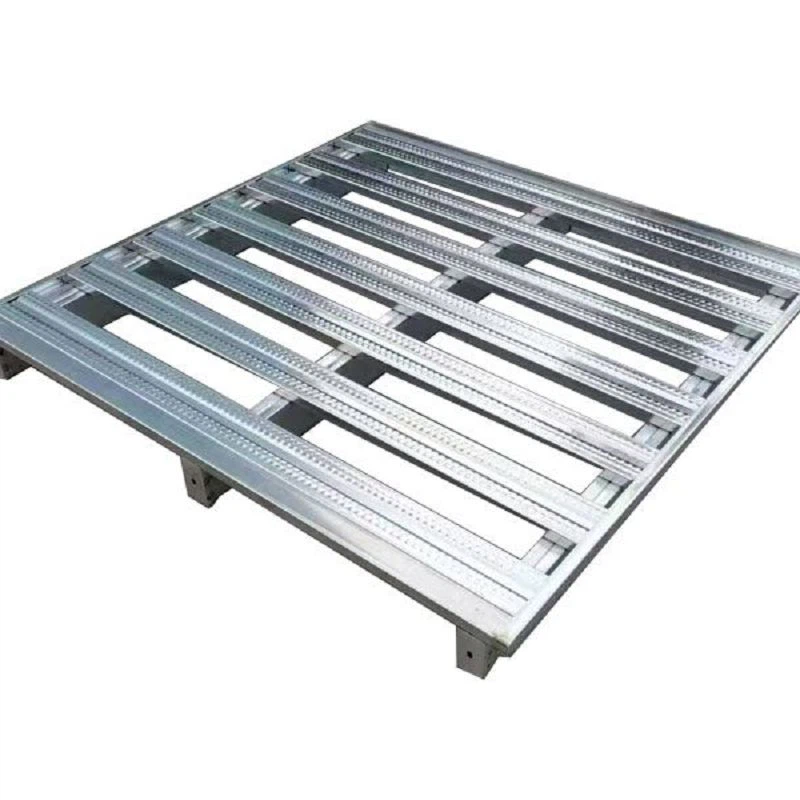

Real - World Applications of Storage Steel Pallets in the Automotive Industry
Many automotive companies are already using storage steel pallets in their operations. For example, in the storage of engine components, steel pallets provide a stable and secure platform. The heavy - duty construction of the pallets ensures that the engines are properly supported during long - term storage, preventing any damage that could occur from shifting or vibration.
In the assembly process, steel pallets are used to transport body parts between different workstations. Their compatibility with automated handling equipment allows for seamless integration into the production line, improving efficiency and reducing the risk of human error.
In the supply chain, steel pallets facilitate the movement of components between suppliers and automotive manufacturers. They can be easily stacked and stored in warehouses, maximizing storage space. And because of their durability, they can withstand the rigors of international shipping, ensuring that components arrive at their destination in good condition.
Conclusion
In conclusion, storage steel pallets can definitely be used in the automotive industry. Their durability, strength, hygiene, compatibility with automation, and resistance to environmental factors make them a suitable choice for storing and transporting automotive components. Although there are challenges such as cost and weight, these can be mitigated through long - term cost analysis and the development of lightweight solutions.
If you're an automotive company looking for a reliable and efficient pallet solution, I encourage you to consider our Storage Steel Pallets. We have a wide range of steel pallet products that can be customized to meet your specific needs. Contact us to discuss your requirements and explore how our storage steel pallets can enhance your automotive operations.
References
- Automotive Industry Handbook: A Comprehensive Guide to Manufacturing and Logistics
- Steel Pallet Manufacturing and Applications Research Report
- Case Studies on the Use of Steel Pallets in Automotive Supply Chains


