


Do high loading metal pallets have a good heat - dissipation property?
As a supplier of high - loading metal pallets, I often get asked about various properties of our products, and one question that comes up quite frequently is whether high - loading metal pallets have a good heat - dissipation property. In this blog, I'll explore this topic in depth to provide you with a comprehensive answer.
Understanding High - Loading Metal Pallets
High - loading metal pallets are designed to carry heavy loads. They are commonly used in industries such as logistics, warehousing, and manufacturing. These pallets are made from robust materials like steel, which gives them the strength to withstand large weights. There are different types of high - loading metal pallets available in the market, including Metal Steeel Pallet, Double - Sided Galvanized Pallets, and Chuan - Type Metal Pallets.
Factors Affecting Heat Dissipation in Metal Pallets
Material Properties
The material of the metal pallet is a crucial factor in determining its heat - dissipation ability. Metals, in general, are good conductors of heat. Steel, which is a common material for high - loading metal pallets, has a relatively high thermal conductivity. This means that it can transfer heat quickly from one point to another. When a high - loading metal pallet is in contact with a hot object, the heat can spread across the pallet surface rapidly.
For example, if a pallet is used to store hot goods, the steel material will absorb the heat and distribute it across the pallet. This is in contrast to materials like wood, which have much lower thermal conductivity and may not dissipate heat as effectively.
Design and Structure
The design and structure of the metal pallet also play a significant role in heat dissipation. Pallets with an open or ventilated design allow air to flow more freely around them. This air circulation helps in carrying away the heat from the pallet surface.

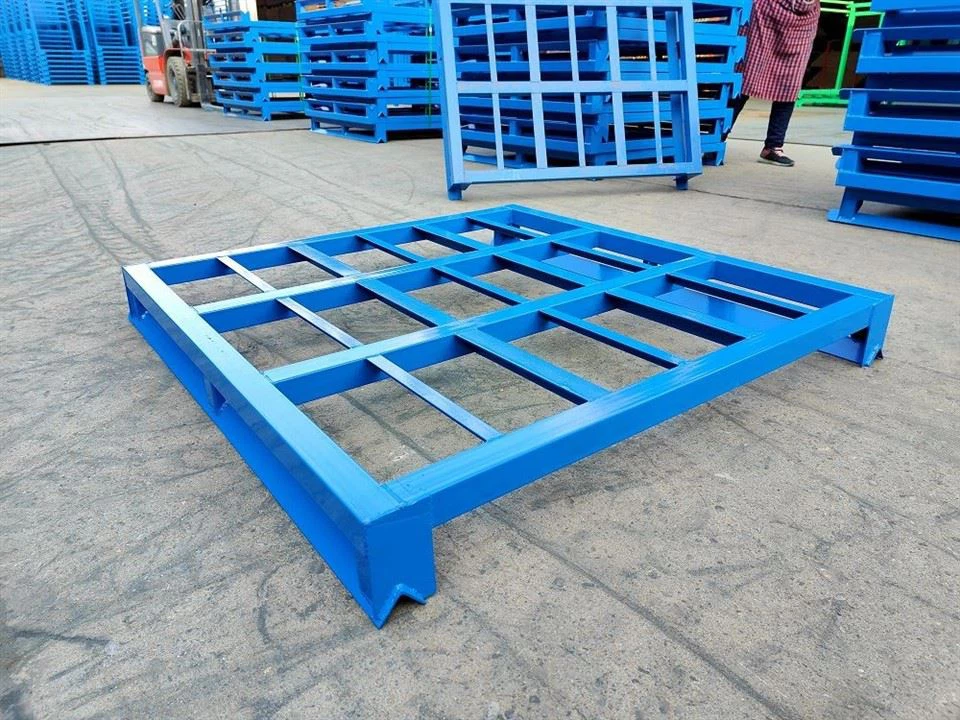
Some high - loading metal pallets are designed with perforations or gaps in their structure. These features increase the surface area exposed to the air, enhancing the heat - dissipation process. For instance, a pallet with a lattice - like structure will have better heat - dissipation properties compared to a solid - surface pallet because the air can pass through the lattice, taking away the heat.
Surface Treatment
The surface treatment of the metal pallet can affect its heat - dissipation ability. A smooth and clean surface generally has better heat - transfer characteristics than a rough or dirty surface. Coatings or finishes on the pallet can also influence heat dissipation.
Galvanized pallets, like the Double - Sided Galvanized Pallets, have a zinc coating. This coating not only provides corrosion resistance but can also impact heat transfer. In some cases, the zinc coating can act as an additional layer for heat conduction, although its effect on overall heat dissipation depends on the thickness and quality of the coating.
Advantages of Good Heat Dissipation in High - Loading Metal Pallets
Product Preservation
In industries where temperature - sensitive products are stored or transported, good heat - dissipation properties in pallets are essential. For example, in the food and pharmaceutical industries, maintaining the right temperature is crucial for product quality and safety. High - loading metal pallets with good heat - dissipation can help prevent the build - up of heat around the products, reducing the risk of spoilage or degradation.
Equipment Longevity
When metal pallets are used in conjunction with machinery or equipment, good heat dissipation can contribute to the longevity of the equipment. Excessive heat can cause wear and tear on machinery parts. By dissipating heat effectively, the pallets can help keep the surrounding environment cooler, reducing the stress on the equipment.
Safety
In some industrial settings, there may be a risk of fire or overheating. Metal pallets with good heat - dissipation properties can help reduce the temperature in the area, minimizing the risk of fire and ensuring a safer working environment.
Measuring Heat Dissipation in High - Loading Metal Pallets
To determine the heat - dissipation ability of high - loading metal pallets, several methods can be used. One common approach is to measure the temperature of the pallet surface over time when it is in contact with a heat source. This can be done using thermocouples or infrared thermometers.
Another method is to calculate the thermal resistance of the pallet. Thermal resistance is a measure of how well a material resists the flow of heat. A lower thermal resistance indicates better heat - dissipation properties.
Real - World Applications and Case Studies
In a large - scale logistics warehouse, high - loading metal pallets were used to store electronic components. These components generate heat during operation. The warehouse management noticed that the metal pallets with a well - ventilated design were able to dissipate the heat more effectively compared to the solid - surface pallets. As a result, the temperature around the electronic components remained within the acceptable range, reducing the risk of component failure.
In a food processing plant, Chuan - Type Metal Pallets were used to transport hot food products. The open structure of these pallets allowed the heat to escape quickly, ensuring that the food products cooled down to the appropriate temperature during transportation.
Conclusion
In conclusion, high - loading metal pallets generally have good heat - dissipation properties due to the high thermal conductivity of the metal materials, well - designed structures, and appropriate surface treatments. These properties offer several advantages in terms of product preservation, equipment longevity, and safety.
If you are in need of high - loading metal pallets for your business, whether it's for logistics, warehousing, or manufacturing, we are here to provide you with the best solutions. Our range of pallets, including Metal Steeel Pallet, Double - Sided Galvanized Pallets, and Chuan - Type Metal Pallets, are designed to meet your specific requirements. Contact us to discuss your needs and start a procurement negotiation.
References
- "Thermal Conductivity of Metals" - Handbook of Materials Science
- "Industrial Pallet Design and Applications" - Journal of Logistics and Supply Chain Management
- "Heat Transfer in Industrial Environments" - Proceedings of the International Conference on Thermal Engineering


