


Hey there! I'm a supplier of steel pallets, and today I want to chat about the inspection criteria for steel pallets. As someone in the industry, I know how crucial it is to ensure that these pallets meet high - quality standards. So, let's dive right in!
1. Material Quality
First off, the material used in steel pallets is super important. We're talking about the type of steel. Most of the time, we use carbon steel or stainless steel. Carbon steel is strong and cost - effective, while stainless steel offers better corrosion resistance.
When inspecting the material, we look at its composition. A proper chemical analysis can tell us if the steel has the right amount of elements like carbon, manganese, and silicon. For example, too much carbon can make the steel brittle, while the right amount of manganese can enhance its strength.
We also check the thickness of the steel. A thicker steel pallet is generally stronger and more durable. But it's not just about being thick; the thickness should be uniform across the pallet. Any significant variations in thickness can lead to weak spots, which might cause the pallet to fail under load.
2. Structural Integrity
The structure of a steel pallet is like the skeleton of a human body. It needs to be strong and well - built. We start by looking at the welds. Good welds are smooth, without any cracks or porosity. A cracked weld can compromise the entire structure of the pallet.
The frame of the pallet should be square and straight. Any warping or bending can make the pallet unstable. We use tools like a straightedge to check for straightness. If the frame is out of alignment, it can cause problems when the pallet is stacked or moved around.
The corners of the pallet are also critical. They should be well - reinforced. A weak corner can easily get damaged during handling, which can lead to the pallet's failure. We make sure that the corners are properly welded and that there are no signs of stress or deformation.
3. Load Capacity
One of the main reasons people use steel pallets is their ability to carry heavy loads. So, checking the load capacity is a must. We test the pallets in a controlled environment to see how much weight they can handle.
There are different types of load tests. Static load tests involve placing a specific weight on the pallet and leaving it there for a certain period. This helps us determine if the pallet can support the weight without any permanent deformation.
Dynamic load tests are a bit more complex. We simulate the real - world conditions of moving the pallet with a load. This includes things like forklift handling and stacking. If the pallet can withstand these dynamic forces, it's a good sign that it can handle the rigors of daily use.
We also consider the distribution of the load. A well - designed pallet should be able to evenly distribute the weight across its surface. If the load is concentrated in one area, it can cause the pallet to break or deform.
4. Surface Finish
The surface finish of a steel pallet is not just for looks. It has practical implications too. A smooth surface finish can prevent damage to the goods being transported on the pallet. It also makes it easier to clean the pallet.
We check for any rough edges or burrs on the surface. These can not only damage the goods but also pose a safety risk to the workers handling the pallets. A proper surface treatment, like painting or galvanizing, can also protect the steel from corrosion.
Galvanized steel pallets have a zinc coating that acts as a barrier against rust. This is especially important if the pallets are going to be used in a humid or outdoor environment. Paint can also provide a layer of protection and can be customized to match the customer's requirements.
5. Dimensions
Accurate dimensions are essential for steel pallets. They need to fit properly in storage racks, trucks, and other handling equipment. We measure the length, width, and height of the pallet to make sure they meet the specified standards.
The tolerances for these dimensions are usually quite tight. Even a small deviation can cause problems. For example, if a pallet is too wide, it might not fit in a storage rack, and if it's too short, it might not provide enough support for the load.
We also check the spacing between the boards or bars on the pallet. This spacing should be consistent and appropriate for the type of goods being transported. If the spacing is too wide, small items might fall through, and if it's too narrow, it can make it difficult to clean the pallet.
6. Safety Features
Safety is always a top priority. Steel pallets should have features that prevent accidents. For example, they should have rounded edges to avoid cuts and bruises. Some pallets also have non - slip surfaces to prevent the load from shifting during transportation.
We also check for any sharp or protruding parts that could cause injury. These parts need to be removed or smoothed out. Additionally, the pallets should be able to withstand normal handling without breaking or falling apart, which is crucial for the safety of the workers.
7. Compatibility
Steel pallets need to be compatible with the equipment used to handle them. This includes forklifts, pallet jacks, and automated storage systems. We make sure that the pallet's design allows for easy and safe handling with these tools.

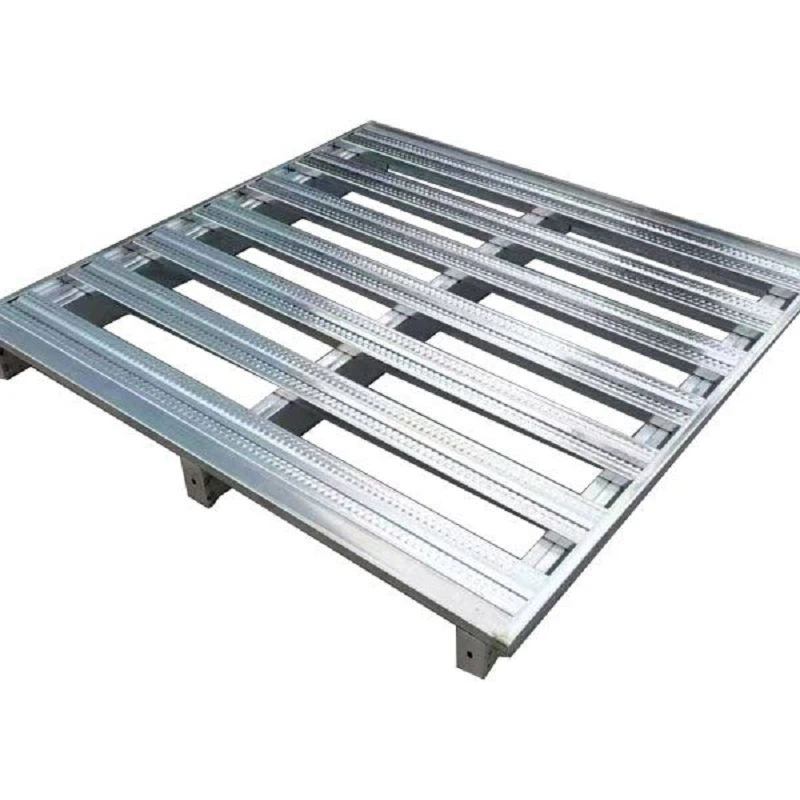
For example, the forks of a forklift should fit properly into the pallet's pockets. If the pockets are too small or too large, it can make it difficult to lift and move the pallet. We also consider the weight of the pallet itself, as it needs to be within the capacity of the handling equipment.
Conclusion
So, there you have it - the main inspection criteria for steel pallets. As a supplier, I take these criteria very seriously. We want to make sure that our customers get the best - quality steel pallets that can meet their needs.
If you're in the market for high - quality steel pallets, I'd love to have a chat with you. Whether you need Storage Steel Pallet for your warehouse or pallets for transportation, we've got you covered. Just reach out, and we can discuss your requirements and find the perfect solution for you.
References
- Steel Pallet Manufacturing Handbook
- Industry Standards for Steel Pallets


