


What are the installation requirements for metal pallets?
As a well - established metal pallet supplier, I've encountered numerous inquiries regarding the installation requirements for metal pallets. Different types of metal pallets, such as Metal Steeel Pallet, Double - Sided Galvanized Pallets, Steel Storage Pallet, Chuan - Type Metal Pallets, and High Loading Metal Pallet, each have their unique installation prerequisites. In this blog, I'll delve into the key factors and steps that must be considered when installing metal pallets.
Surface Conditions
The first and most fundamental aspect of metal pallet installation is the surface on which they will be placed. A flat, stable surface is non - negotiable. Uneven surfaces can cause the pallets to tilt, which may lead to product instability, risk of damage, and in extreme cases, accidents.
For indoor storage, a concrete floor is often the best choice. Before installation, it's essential to check for any cracks, bumps, or unevenness. If minor irregularities are found, they can be leveled using appropriate floor - leveling compounds. For large - scale uneven areas, professional floor resurfacing may be required.
In outdoor settings, the ground should be properly graded and compacted. A gravel base can provide additional stability, but it also needs to be evenly spread and compacted to ensure a flat surface for the metal pallets. The type of surface also affects the long - term durability of the pallets. For example, if the surface is too abrasive, it may cause wear and tear on the bottom of the pallets over time.
Space and Clearance
Proper space and clearance are vital for efficient metal pallet installation. When planning the layout, the dimensions of the pallets themselves, as well as the equipment that will be used to handle them (such as forklifts or pallet jacks), should be taken into account.
There should be enough space between pallets to allow for easy movement of handling equipment. A general rule of thumb is to leave at least 3 - 6 inches of clearance between adjacent pallets. Additionally, adequate aisle space is required for the safe and efficient operation of forklifts. The width of the aisle depends on the type of forklift being used. For a counterbalance forklift, the aisle width may need to be 10 - 12 feet, while a narrow - aisle forklift can operate in aisles as narrow as 5 - 6 feet.
Vertical clearance is also important, especially if the pallets will be stacked. There should be enough height clearance in the storage area to accommodate the full height of the stacked pallets, plus any additional clearance required for the lifting equipment to operate safely.
Anchoring and Stability
In certain applications, especially in areas prone to movement or vibration (such as near heavy machinery or in transportation environments), it may be necessary to anchor the metal pallets. Anchoring helps to prevent the pallets from shifting, tipping over, or being displaced during normal use.
There are several methods of anchoring metal pallets. One common method is to use floor anchors, which can be attached to the floor surface and then connected to the pallets using bolts or brackets. Another option is to use inter - pallet connectors, which link adjacent pallets together, enhancing the overall stability of the pallet arrangement.
The choice of anchoring method depends on the specific application and the requirements of the storage environment. For example, in a high - traffic warehouse, a more robust anchoring system may be needed compared to a stationary storage area.
Assembly (if required)
Some metal pallets may come in a disassembled state and require assembly on - site. When assembling metal pallets, it's crucial to follow the manufacturer's instructions carefully.
All components should be inspected for any damage during transit. If any parts are found to be damaged, they should be replaced immediately to ensure the structural integrity of the pallet. During assembly, the use of the correct tools is essential. For example, if bolts are used to connect different parts of the pallet, the appropriate torque specifications must be followed to avoid under - tightening or over - tightening.
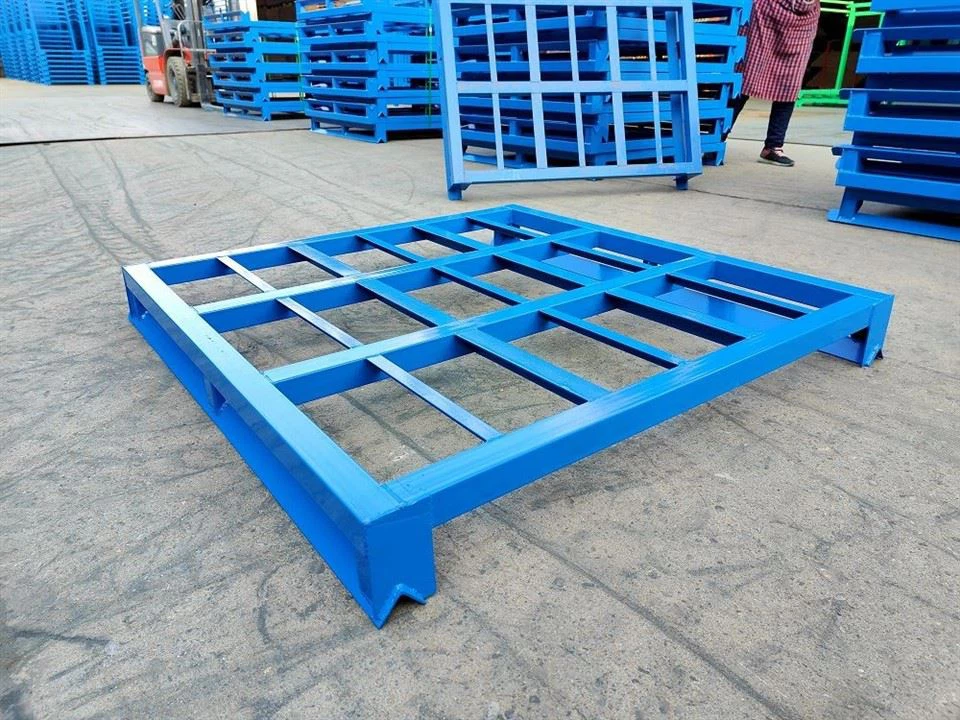

Pre - drilled holes on the pallet components should align properly. If there are any alignment issues, it may be a sign of a manufacturing defect or damage, and this should be addressed before proceeding with the assembly.
Compatibility with Storage Systems
Metal pallets must be compatible with the storage systems they will be used with. Whether it's a rack system, a conveyor system, or a simple open - floor storage area, the design and dimensions of the pallets need to match the requirements of the storage system.
For rack storage, the pallets should fit securely on the rack beams. The width and length of the pallets should be such that they provide adequate support on the beams without overhanging too much. The weight - capacity of the pallets should also be compatible with the load - rating of the racking system.
In conveyor systems, the pallets need to be of the appropriate size and design to ensure smooth movement along the conveyor. The surface texture of the pallet may also affect its performance on the conveyor, so it's important to choose pallets that are suitable for the specific type of conveyor system.
Environmental Considerations
The environmental conditions in which the metal pallets will be installed also play a significant role. If the pallets are to be used in a humid or corrosive environment, such as a chemical storage facility or a coastal area, choosing corrosion - resistant pallets (like double - sided galvanized pallets) is crucial.
In areas with extreme temperatures, the material properties of the pallets may change. For example, in cold temperatures, some metals may become more brittle, increasing the risk of breakage. In high - temperature environments, the pallets may expand, which could cause issues with fit and stability.
In addition, if the storage area is prone to dust or debris, proper ventilation and cleaning procedures should be in place to prevent the accumulation of contaminants on the pallets, which could affect their performance and durability.
Conclusion
In summary, the installation requirements for metal pallets are multi - faceted and require careful planning and attention to detail. From surface conditions and space clearance to anchoring, assembly, system compatibility, and environmental considerations, each aspect plays a crucial role in ensuring the safe and efficient use of metal pallets.
If you're in the market for high - quality metal pallets and need expert advice on installation or have specific requirements for your storage or transportation needs, I'm here to help. I can provide detailed consultations and customized solutions based on your unique circumstances. Feel free to reach out to me to start a conversation about your potential metal pallet purchase. Let's work together to find the best metal pallets and installation solutions for your business.
References
- "Warehouse Storage and Material Handling Handbook"
- Industry standards and guidelines for metal pallet manufacturing and installation


