


Hey there! As a supplier of metal steel pallets, I often get asked about the bending strength of these pallets. It's a crucial factor, especially when you're looking to use them for heavy - duty storage and transportation. So, let's dive right into what bending strength is and why it matters for metal steel pallets.
What is Bending Strength?
Bending strength, in simple terms, is the maximum stress that a material can withstand before it starts to bend or break. For metal steel pallets, it's all about how much weight they can hold without deforming. When you stack goods on a pallet, the weight creates a downward force. If the pallet's bending strength isn't high enough, it can start to sag or even break under the load.
Let's think about it like this. You've got a stack of boxes on a pallet, and you're moving them around in a warehouse. If the pallet can't handle the weight, it might collapse, causing damage to the goods and potentially injuring workers. That's why understanding the bending strength of metal steel pallets is so important.
Factors Affecting Bending Strength
There are several factors that can influence the bending strength of metal steel pallets.
1. Material Quality
The type of steel used in the pallet is a major factor. High - quality steel with the right composition will have better bending strength. For example, steel with a higher carbon content can be stronger, but it also needs to be balanced with other elements to ensure it's not too brittle. As a supplier, we make sure to source the best quality steel for our pallets to ensure they can handle heavy loads.
2. Pallet Design
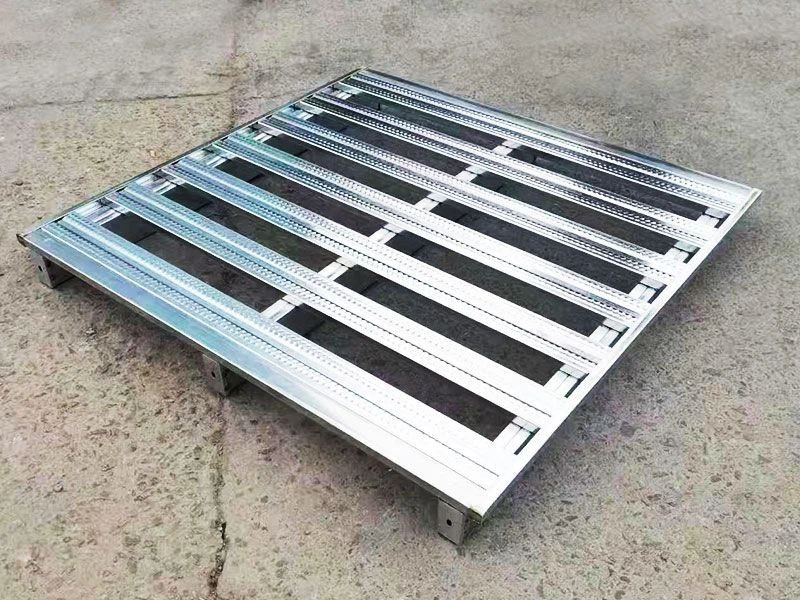
The design of the pallet plays a huge role in its bending strength. Pallets with more support beams or a well - thought - out structure are generally stronger. For instance, our Chuan - Type Metal Pallets have a unique design that distributes the weight evenly across the pallet, increasing its bending strength. The way the beams are placed and how they're connected can make a big difference in how much weight the pallet can hold.
3. Thickness of the Steel
Thicker steel generally means higher bending strength. When we manufacture our pallets, we carefully select the appropriate thickness of the steel based on the intended use of the pallet. For High Loading Metal Pallets, we use thicker steel to ensure they can handle extremely heavy loads without bending.
Testing the Bending Strength
To ensure that our metal steel pallets meet the required standards, we conduct various tests. One common test is the three - point bending test. In this test, a pallet is placed on two supports, and a load is applied in the middle. The amount of weight that can be applied before the pallet starts to bend beyond an acceptable limit is measured.
We also use computer - aided design (CAD) and simulation software to predict the bending strength of our pallets during the design phase. This helps us make adjustments to the design and material selection to optimize the bending strength.
Importance of Bending Strength in Different Applications
1. Warehouse Storage
In a warehouse, pallets are used to store large quantities of goods. High bending strength is essential to ensure that the pallets can support the weight of the stacked products without collapsing. Our Steel Storage Pallet is designed with high bending strength in mind, making it perfect for long - term storage in warehouses.
2. Transportation
When pallets are used for transportation, they are subjected to various forces, such as vibrations and impacts. A pallet with high bending strength can better withstand these forces and protect the goods during transit. This is especially important for international shipping, where pallets may be moved multiple times and exposed to different handling conditions.
3. Automated Systems
In modern warehouses, many operations are automated. Pallets need to be able to move smoothly through conveyors and other automated equipment. If a pallet has low bending strength and deforms, it can cause jams in the system, leading to delays and increased costs.
How to Choose the Right Pallet Based on Bending Strength
When you're looking to buy metal steel pallets, it's important to consider the bending strength based on your specific needs. Here are some tips:

1. Determine the Load Capacity
First, figure out how much weight you'll be placing on the pallets. If you're dealing with heavy machinery parts, you'll need a pallet with a high bending strength. On the other hand, if you're storing lighter items like clothing or small electronics, a pallet with a lower bending strength might be sufficient.
2. Consider the Application
Think about where the pallets will be used. If it's for a high - traffic warehouse or for long - distance transportation, you'll want a pallet with a higher bending strength. If it's for a small local storage facility, you might be able to get away with a less robust pallet.
3. Check the Manufacturer's Specifications
Always ask the supplier for the bending strength specifications of the pallets. A reliable supplier, like us, will provide detailed information about the load capacity and bending strength of our pallets.
Conclusion
In conclusion, the bending strength of metal steel pallets is a critical factor that affects their performance in storage and transportation. As a supplier, we're committed to providing high - quality pallets with excellent bending strength. Whether you need Steel Storage Pallet, Chuan - Type Metal Pallets, or High Loading Metal Pallets, we've got you covered.
If you're in the market for metal steel pallets and want to discuss your specific requirements, don't hesitate to reach out. We're here to help you find the perfect pallets for your business.
References
- Metal Packaging and Pallet Design Handbook
- Steel Construction Manual


