


Hey there! As a supplier of sectional racking, I often get asked about the capacity of sectional racking. So, I thought I'd share some insights on this topic in today's blog.
First off, let's understand what sectional racking is. Sectional racking is a type of storage system that consists of multiple sections or bays. It's highly customizable and can be adjusted to fit different storage needs and spaces. You can easily add or remove sections as your inventory changes, which makes it a popular choice for warehouses, distribution centers, and retail stores.
Now, let's dive into the capacity of sectional racking. The capacity of sectional racking can vary widely depending on several factors. One of the most important factors is the design and construction of the racking. Different types of sectional racking are built to handle different weight loads.
For instance, we offer Powder-Coated Plug-in Racking. This type of racking is known for its durability and relatively high capacity. The powder coating not only gives it a nice finish but also provides protection against corrosion. It can typically handle medium to heavy loads, making it suitable for storing a variety of products such as large boxes, industrial equipment, and pallets.
Another option is the Hot-Dip Galvanized Detachable Rack. Hot-dip galvanization is a process that coats the steel with a thick layer of zinc, which offers excellent corrosion resistance. This racking is designed to withstand heavy loads and harsh environments. It's often used in outdoor storage areas or places where there's a risk of moisture and rust. The capacity of hot-dip galvanized detachable racks can be quite high, allowing you to store large and heavy items safely.
We also have Cold Galvanized Detachable Rack. Cold galvanizing is a less expensive alternative to hot-dip galvanizing. While it still provides some level of corrosion protection, the capacity of cold galvanized detachable racks is usually more suitable for lighter loads. It's a great option for storing smaller items, such as small parts, tools, and lightweight boxes.
The height of the sectional racking also plays a significant role in determining its capacity. Taller racks can generally store more items vertically, but they need to be properly engineered to support the weight. If you stack too much weight on a tall rack without proper reinforcement, it can lead to instability and safety issues. So, when considering the height of your sectional racking, make sure to work with a professional to ensure it's designed to handle the intended load.
The spacing between the shelves is another factor. If you have wider shelves, you can store larger items, but the overall number of items you can store per bay may be less. On the other hand, narrower shelves allow for more items to be stored horizontally, but they may not be suitable for large or bulky products. You need to find the right balance based on the size and shape of the items you plan to store.
The material used in the construction of the racking is crucial. Most sectional racking is made of steel, which is strong and durable. However, the quality of the steel can vary. High-quality steel can handle heavier loads and has a longer lifespan. When choosing a sectional racking system, it's important to ask about the grade of steel used and its load-bearing capacity.
In addition to the physical design and construction, the way you load the racking also affects its capacity. It's important to distribute the weight evenly across the shelves. Overloading one section of the rack can cause it to bend or collapse. You should also follow the recommended loading patterns provided by the manufacturer.
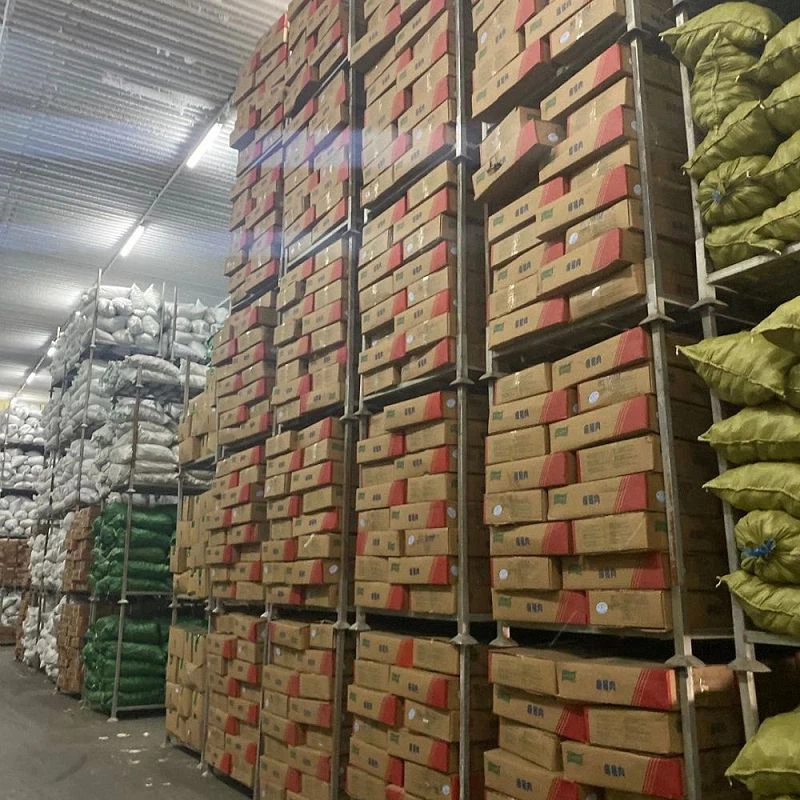

Let's talk about some real-world examples to give you a better idea of the capacity of sectional racking. In a typical warehouse setting, a medium-sized sectional racking system with a height of around 6 meters and a bay width of 2.4 meters can have a capacity of several tons per bay. This can vary depending on the type of racking and the specific design. For example, if you're using a powder-coated plug-in racking system, you might be able to store up to 5 tons per bay, while a cold galvanized detachable rack might be limited to 2 - 3 tons per bay.
When it comes to pallet storage, the capacity of sectional racking is often measured in terms of the number of pallets it can hold. A standard pallet racking system can hold anywhere from a few pallets to dozens of pallets per bay, depending on the size of the pallets and the design of the racking. For example, a wide aisle pallet racking system can hold 4 - 6 pallets per bay, while a narrow aisle system can hold more, up to 10 - 12 pallets per bay.
So, how do you determine the right capacity for your sectional racking? First, you need to assess your storage needs. Make a list of the items you plan to store, including their size, weight, and quantity. Consider any future growth or changes in your inventory. Then, work with a professional racking supplier, like us, to design a system that meets your specific requirements.
We have a team of experts who can help you calculate the capacity you need based on your storage goals. We'll take into account all the factors we've discussed, such as the type of racking, the height, the spacing, and the loading patterns. We'll also provide you with a detailed quote and installation plan.
If you're interested in learning more about the capacity of sectional racking or want to discuss your storage needs, don't hesitate to reach out. We're here to help you find the perfect storage solution for your business. Whether you need a small racking system for a local store or a large-scale warehouse solution, we've got you covered.
In conclusion, the capacity of sectional racking is determined by a variety of factors, including the design, construction, height, spacing, material, and loading method. By understanding these factors and working with a professional supplier, you can ensure that your sectional racking system has the right capacity to meet your storage needs.
References:
- General knowledge of the storage industry and experience as a sectional racking supplier.


