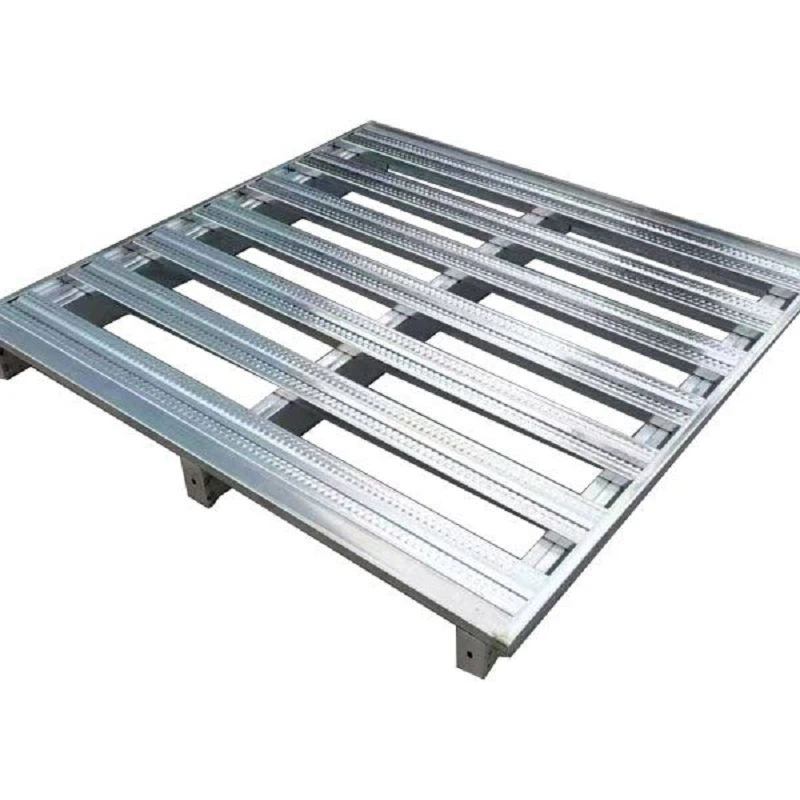
As a supplier of Storage Steel Pallet, I've witnessed firsthand the diverse needs and preferences of our customers when it comes to storage solutions. One of the most common questions I encounter is about the difference between welded and riveted storage steel pallets. In this blog post, I'll delve into the details of these two types of pallets, highlighting their unique features, advantages, and disadvantages to help you make an informed decision for your storage requirements.
Welded Storage Steel Pallets
Welded storage steel pallets are constructed by fusing steel components together using welding techniques. This process creates a strong and durable bond between the parts, resulting in a pallet that can withstand heavy loads and harsh environments. Here are some key characteristics of welded storage steel pallets:
Strength and Durability
Welding provides a continuous and solid connection between the steel parts, making welded pallets extremely robust. They can handle high weights without deformation, making them ideal for storing and transporting heavy items. For example, in industrial settings where large machinery parts or heavy raw materials need to be stored, welded pallets can offer reliable support.
Customization
Welded pallets can be easily customized to meet specific requirements. The welding process allows for the creation of pallets in various sizes, shapes, and configurations. Whether you need a pallet with a specific load capacity, a unique design for a particular storage system, or a pallet with additional features such as reinforced edges or anti-slip surfaces, welded pallets can be tailored to your needs.
Hygiene and Cleanliness
Since welded pallets have no loose parts or joints, they are easy to clean and maintain. There are no crevices or gaps where dirt, debris, or moisture can accumulate, making them suitable for use in cleanroom environments or industries with strict hygiene standards, such as the food and pharmaceutical sectors.
Cost
While welded pallets generally have a higher upfront cost compared to riveted pallets, their long-term durability and low maintenance requirements can result in cost savings over time. They are less likely to require frequent repairs or replacements, reducing the overall cost of ownership.
However, welded pallets also have some limitations. The welding process can be time-consuming and labor-intensive, which may lead to longer production times. Additionally, if a welded pallet is damaged, it can be more difficult and expensive to repair compared to a riveted pallet.
Riveted Storage Steel Pallets
Riveted storage steel pallets are assembled by joining steel components using rivets. Rivets are mechanical fasteners that are inserted through holes in the steel parts and then deformed to create a secure connection. Here are the main features of riveted storage steel pallets:
Ease of Assembly and Disassembly
Riveted pallets are relatively easy to assemble and disassemble, which can be an advantage in situations where pallets need to be transported in a flat-pack form or where quick modifications are required. This makes them a popular choice for temporary storage or projects with changing storage needs.
Repairability
If a riveted pallet is damaged, it can be easily repaired by replacing the damaged rivets or components. This can be done on-site with minimal tools and expertise, reducing downtime and repair costs.
Cost
Riveted pallets are generally more cost-effective than welded pallets, especially for large quantities. The assembly process is less labor-intensive, which results in lower production costs. This makes them a budget-friendly option for businesses looking to maximize their storage capacity without breaking the bank.
However, riveted pallets also have some drawbacks. The riveted joints may not be as strong as welded joints, which can limit the load capacity of the pallet. Over time, the rivets may loosen due to repeated handling and vibration, leading to a decrease in the pallet's structural integrity. Additionally, riveted pallets may have more crevices and gaps where dirt and debris can accumulate, making them less suitable for applications with strict hygiene requirements.
Choosing the Right Pallet for Your Needs
When deciding between welded and riveted storage steel pallets, it's important to consider your specific requirements and priorities. Here are some factors to keep in mind:
Load Capacity
If you need to store and transport heavy items, welded pallets are likely the better choice. Their superior strength and durability make them capable of handling high weights without deformation. However, if your loads are relatively light, riveted pallets may be sufficient.
Storage Environment
The storage environment plays a crucial role in determining the type of pallet you choose. If your storage area is prone to moisture, dirt, or harsh chemicals, welded pallets are a better option due to their resistance to corrosion and ease of cleaning. On the other hand, if your storage needs are temporary or subject to change, riveted pallets' ease of assembly and disassembly may be more beneficial.
Budget
Cost is always a consideration when making a purchasing decision. If you have a limited budget, riveted pallets may be the more economical choice. However, if you're looking for a long-term investment and are willing to pay a higher upfront cost for a more durable and reliable pallet, welded pallets may be worth the extra expense.
Customization
If you require a pallet with specific dimensions, features, or configurations, welded pallets offer greater flexibility in terms of customization. Riveted pallets can also be customized to some extent, but the options may be more limited.
Conclusion
In conclusion, both welded and riveted storage steel pallets have their own unique advantages and disadvantages. Welded pallets are known for their strength, durability, and customization options, while riveted pallets are valued for their ease of assembly, repairability, and cost-effectiveness. By carefully considering your load capacity requirements, storage environment, budget, and customization needs, you can choose the pallet that best suits your business.
As a Storage Steel Pallet supplier, we have a wide range of welded and riveted pallets to meet your diverse needs. Our team of experts is always available to provide you with professional advice and guidance to help you make the right choice. If you're interested in learning more about our products or would like to discuss your specific requirements, please don't hesitate to contact us. We look forward to working with you to find the perfect storage solution for your business.

References
- Smith, J. (2020). The Ultimate Guide to Steel Pallets. Industrial Storage Magazine.
- Johnson, A. (2019). Comparing Welded and Riveted Pallets for Industrial Use. Logistics Today.
- Brown, R. (2018). Choosing the Right Pallet for Your Business. Warehouse Management Journal.