


As a supplier of Steel Storage Pallet, I often receive inquiries about the stacking height limit for steel storage pallets. This is a crucial question for businesses that rely on efficient and safe warehousing. In this blog post, I will delve into the factors that determine the stacking height limit and provide some practical guidelines.
Understanding the Basics of Steel Storage Pallets
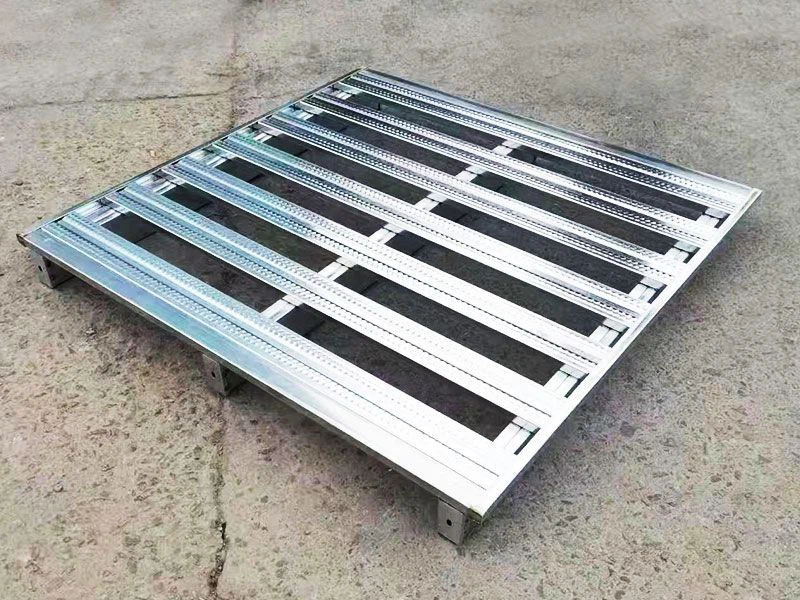
Steel storage pallets are a popular choice in various industries due to their durability, strength, and resistance to damage. They can withstand heavy loads, making them suitable for storing and transporting a wide range of products. Our company offers different types of steel pallets, such as High Loading Metal Pallet, Chuan - Type Metal Pallets, Metal Steeel Pallet, and Double - Sided Galvanized Pallets, each designed to meet specific needs.
Factors Affecting the Stacking Height Limit
1. Pallet Design and Construction
The design and construction of the steel pallet play a significant role in determining its stacking height limit. Pallets with a robust frame structure and proper bracing can support more weight and be stacked higher. For example, our high - loading metal pallets are engineered with reinforced beams and sturdy joints, which allow them to handle heavier loads and be stacked at greater heights compared to standard pallets.

2. Load Distribution
Even distribution of the load on the pallet is essential for safe stacking. Uneven loads can cause stress concentrations on the pallet, leading to deformation or failure. When stacking pallets, it is crucial to ensure that the weight is evenly spread across the surface. This can be achieved by using appropriate packing materials and proper loading techniques.
3. Material Quality
The quality of the steel used in the pallet's manufacture affects its strength and durability. High - grade steel can withstand more stress and weight, allowing for higher stacking heights. Our steel pallets are made from premium - quality steel, which ensures reliable performance and long - term use.
4. Warehouse Conditions
The environment in which the pallets are stored also matters. Factors such as humidity, temperature, and the presence of corrosive substances can affect the structural integrity of the pallets. In a humid warehouse, for instance, steel pallets may be more prone to rusting, which can weaken them over time. Therefore, it is important to maintain a suitable storage environment and regularly inspect the pallets for signs of damage.
Calculating the Stacking Height Limit
To calculate the stacking height limit for steel storage pallets, you need to consider the following steps:
- Determine the Maximum Load Capacity of the Pallet: Refer to the manufacturer's specifications to find out the maximum weight that the pallet can support. This value is based on various factors such as the pallet's design, material, and construction.
- Assess the Weight of the Load on Each Pallet: Weigh the products or materials that will be placed on the pallet to ensure that the total weight does not exceed the pallet's maximum load capacity.
- Consider the Downtime and Deformation: Over time, pallets may experience some deformation due to the constant weight of the stack. It is important to account for this when calculating the stacking height. A general rule of thumb is to reduce the maximum stacking height by a certain percentage to account for potential deformation.
- Factor in the Warehouse Structure: The strength of the warehouse floor and racking system also limits the stacking height. Make sure that the floor can support the weight of the stacked pallets and that the racking system is designed to handle the specified height.
General Guidelines for Stacking Steel Storage Pallets
1. Standard Stacking
For standard steel pallets in a normal warehouse environment, a stacking height of 3 - 5 pallets is often considered safe. However, this can vary depending on the factors mentioned above. If the pallets are of high - quality, the loads are evenly distributed, and the warehouse conditions are optimal, the stacking height can be increased.
2. High - Density Storage
In high - density storage systems, such as automated storage and retrieval systems (AS/RS), the stacking height can be much higher. These systems are designed to handle the weight and stress of stacked pallets more efficiently. However, it is still crucial to adhere to the load - capacity specifications of the pallets and the system.
3. Safety First
Regardless of the calculated stacking height limit, safety should always be the top priority. Regularly inspect the pallets for any signs of damage, such as cracks, bends, or rust. Replace damaged pallets immediately to prevent accidents.
Importance of Adhering to the Stacking Height Limit
Adhering to the stacking height limit is not only important for safety but also for the efficiency of your warehouse operations. Over - stacking pallets can lead to several problems:
- Structural Failure: Exceeding the stacking height limit can cause the pallets to collapse, resulting in damage to the products, equipment, and potentially injuring workers.
- Reduced Accessibility: Over - stacked pallets can make it difficult to access the products, leading to delays in order fulfillment and increased labor costs.
- Increased Risk of Fire: A high stack of pallets can act as a fuel source in the event of a fire, increasing the risk of a large - scale fire and making it more difficult for firefighters to control.
How Our Company Can Help
As a leading supplier of Steel Storage Pallet, we are committed to providing our customers with high - quality pallets that meet their specific needs. Our team of experts can assist you in determining the appropriate stacking height limit for your pallets based on your warehouse conditions, load requirements, and storage system. We also offer a range of services, including pallet customization, installation, and maintenance, to ensure that you get the most out of your investment.
If you are interested in learning more about our steel storage pallets or need help with determining the stacking height limit for your application, please feel free to contact us. We look forward to discussing your requirements and providing you with the best solutions.
References
- "Warehouse Safety Guidelines", Occupational Safety and Health Administration (OSHA)
- "Pallet Design and Engineering Handbook", Institute of Packaging Professionals


