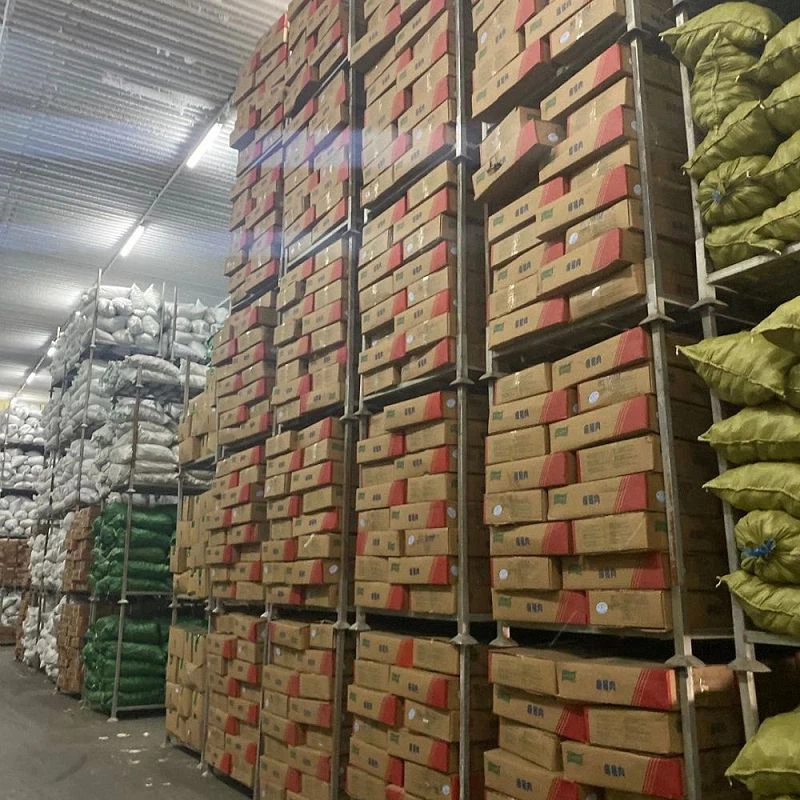
Warehouse management is a complex and ever - evolving field, where the selection of appropriate storage solutions is crucial for optimizing space, ensuring safety, and improving efficiency. As a supplier of Warehouse Detachable Rack, I often encounter the question: Are warehouse detachable racks suitable for storing heavy items?

Understanding Warehouse Detachable Racks
Warehouse detachable racks are modular storage systems designed to offer flexibility and ease of installation. They are typically composed of upright frames, beams, and sometimes additional accessories. The detachable nature of these racks allows for quick assembly and disassembly, making them ideal for warehouses that need to reconfigure their storage layout frequently.
One of the key advantages of warehouse detachable racks is their adaptability. They can be customized to fit various warehouse dimensions and storage requirements. For example, Sectional Racking offers a sectional design that can be easily expanded or reduced according to the inventory volume. This flexibility is particularly beneficial for businesses experiencing seasonal fluctuations in stock levels.
Structural Integrity and Load - Bearing Capacity
When it comes to storing heavy items, the structural integrity and load - bearing capacity of the racks are of utmost importance. Warehouse detachable racks are engineered to meet high - strength standards. High - quality materials, such as cold - rolled steel, are commonly used in the manufacturing process.
Cold - rolled steel provides excellent strength and durability, making it suitable for heavy - duty applications. Our Cold Galvanized Detachable Rack is a prime example. The cold - galvanized coating not only enhances the corrosion resistance of the rack but also adds to its overall strength.
Manufacturers of warehouse detachable racks conduct rigorous testing to determine the load - bearing capacity of each rack model. These tests simulate real - world conditions, including the weight distribution of heavy items. As a result, many detachable racks can support significant weights, ranging from a few hundred kilograms to several tons per shelf or bay.
Design Features for Heavy Item Storage
Warehouse detachable racks are designed with several features that make them well - suited for storing heavy items.
Beam Design: The beams of detachable racks are often designed with a high moment of inertia. This means they can resist bending and deformation under heavy loads. Some beams have a special cross - sectional shape, such as a C - channel or an I - beam, which provides superior strength and load - distribution capabilities.
Upright Frames: The upright frames of the racks are the vertical supports that hold the weight of the beams and the stored items. They are typically made with thick gauge steel and feature a reinforced design. Some upright frames have additional perforations or notches, which not only allow for easy beam adjustment but also enhance the overall stability of the rack.
Connection Systems: The connection systems between the beams and the upright frames are critical in ensuring the stability of the rack. Most warehouse detachable racks use a reliable and sturdy connection method, such as a locking pin or a twist - lock mechanism. These connections prevent the beams from disengaging from the upright frames, even under heavy loads.
Safety Considerations
Safety is a top priority when storing heavy items in any warehouse racking system. Warehouse detachable racks come with several safety features to protect both the stored items and the personnel working in the warehouse.
Overload Protection: Manufacturers provide clear guidelines on the maximum load - bearing capacity of each rack. By following these guidelines, warehouse operators can ensure that the racks are not overloaded. Additionally, some advanced racking systems are equipped with load - sensing devices that can alert operators if the weight on a shelf exceeds the safe limit.
Stability Bracing: To prevent the racks from tipping over, stability bracing is often installed. This can include diagonal braces, horizontal braces, or base plates that anchor the racks to the floor. These bracing elements enhance the lateral stability of the racks, especially when storing heavy items at higher levels.
Regular Inspections: Regular inspections of the racks are essential to identify any signs of wear, damage, or misalignment. Warehouse operators should conduct visual inspections on a regular basis and perform more detailed inspections at least once a year. Any damaged or worn components should be replaced immediately to maintain the safety and integrity of the rack.
Cost - Effectiveness
When considering the suitability of warehouse detachable racks for storing heavy items, cost - effectiveness is an important factor. Compared to fixed - structure racks, detachable racks offer several cost advantages.
Lower Initial Investment: The modular design of detachable racks allows for a lower initial investment. Since they can be easily assembled and disassembled, there is no need for expensive installation equipment or professional installation services in most cases. Warehouse operators can save on installation costs and labor expenses.
Reduced Storage Costs: The flexibility of detachable racks enables warehouses to optimize their storage space. By adjusting the rack layout according to the inventory volume, warehouses can reduce the amount of wasted space. This leads to lower storage costs in the long run.
Long - Term Durability: High - quality warehouse detachable racks are built to last. With proper maintenance, they can serve a warehouse for many years. This long - term durability reduces the need for frequent replacements, resulting in cost savings over time.
Case Studies
Let's look at some real - world examples of how warehouse detachable racks have been successfully used for storing heavy items.
A manufacturing company that produces large machinery parts needed to store its heavy inventory in a warehouse. They chose a set of Sectional Racking. The sectional design allowed them to customize the rack layout to fit their warehouse space. The high - strength beams and upright frames were able to support the heavy machinery parts, and the detachable nature of the racks made it easy to reconfigure the storage area when new products were introduced.
Another example is a logistics company that deals with heavy pallets of construction materials. They installed Cold Galvanized Detachable Rack in their warehouse. The cold - galvanized coating protected the racks from corrosion in the sometimes - humid warehouse environment. The racks' load - bearing capacity was sufficient to store the heavy pallets safely, and the easy - to - assemble design saved them time and money during installation.
Conclusion
In conclusion, warehouse detachable racks are indeed suitable for storing heavy items. Their structural integrity, load - bearing capacity, design features for heavy - duty use, safety considerations, and cost - effectiveness make them a viable option for warehouses of all sizes.
If you are in the market for a reliable storage solution for your heavy items, I encourage you to consider our Warehouse Detachable Rack. Our team of experts can help you select the right rack model based on your specific requirements. We are committed to providing high - quality products and excellent customer service. Contact us today to start a conversation about your storage needs and explore how our detachable racks can optimize your warehouse operations.
References
- "Warehouse Racking Systems: Design, Installation, and Safety" by Industrial Storage Association.
- "Load - Bearing Capacity of Modular Racking Systems" in Journal of Material Handling and Logistics.