


As a supplier of high loading metal pallets, I understand the critical importance of accurately testing the load - bearing capacity of these pallets. High loading metal pallets are widely used in various industries such as logistics, warehousing, and manufacturing, where they need to support heavy loads safely and efficiently. In this blog, I will share some effective methods for testing the load - bearing capacity of high loading metal pallets.
1. Understanding the Basics of Load - Bearing Capacity
Before diving into the testing methods, it is essential to understand what load - bearing capacity means. The load - bearing capacity of a high loading metal pallet refers to the maximum amount of weight that the pallet can support without experiencing significant deformation or failure. This capacity is determined by several factors, including the material of the pallet, its design, and the manufacturing process.
High loading metal pallets are typically made of steel or other high - strength metals. The quality and thickness of the metal play a crucial role in determining the load - bearing capacity. For example, pallets made of thicker steel sheets generally have a higher load - bearing capacity. Additionally, the design of the pallet, such as the number and arrangement of support beams, also affects its ability to distribute and withstand loads.
2. Visual Inspection
The first step in testing the load - bearing capacity of high loading metal pallets is a visual inspection. This simple yet important step can help identify any obvious defects or damages that may affect the pallet's performance.
During the visual inspection, check for signs of corrosion, cracks, or dents on the pallet surface. Corrosion can weaken the metal structure over time, reducing the pallet's load - bearing capacity. Cracks and dents can also compromise the integrity of the pallet, leading to potential failure under heavy loads.
Inspect the welds and joints of the pallet. Poorly welded joints can easily come apart when subjected to stress, so ensure that all welds are smooth, continuous, and free of defects. Also, check the alignment of the support beams and other components to make sure they are properly assembled.
3. Static Load Testing
Static load testing is one of the most common methods for testing the load - bearing capacity of high loading metal pallets. This test involves placing a known weight on the pallet and observing its performance over a certain period.
To conduct a static load test, first, place the pallet on a flat and stable surface. Then, gradually add weights to the pallet until it reaches the desired test load. The test load should be based on the manufacturer's specified load - bearing capacity or the expected maximum load in real - world applications.

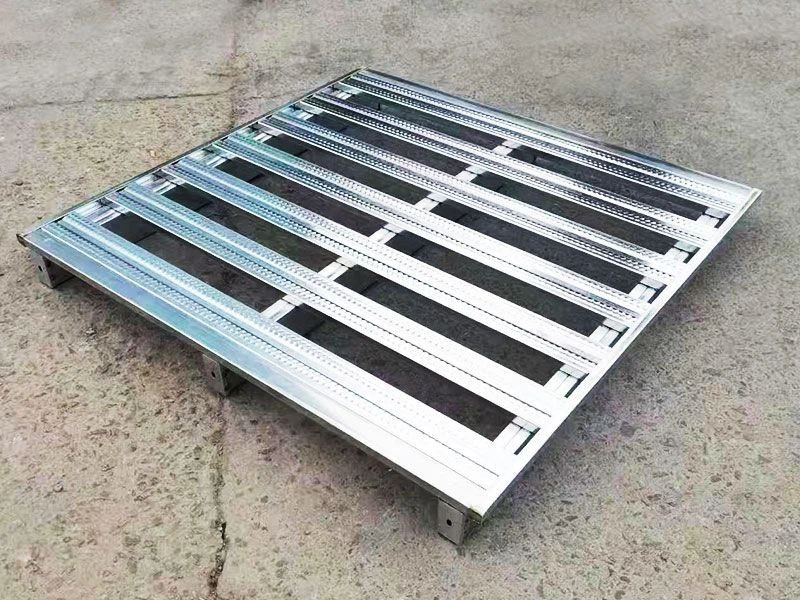
Once the test load is applied, leave the pallet under the load for a predetermined period, usually several hours. During this time, closely monitor the pallet for any signs of deformation, such as bending or sagging. If the pallet shows excessive deformation or fails to support the load, it indicates that its load - bearing capacity is insufficient.
4. Dynamic Load Testing
In addition to static load testing, dynamic load testing is also necessary to simulate real - world conditions. High loading metal pallets are often subjected to dynamic forces during handling, such as lifting, stacking, and transportation.
Dynamic load testing can be performed using specialized equipment, such as a forklift or a pallet jack. The test involves repeatedly applying dynamic loads to the pallet, such as lifting and dropping it, or moving it over uneven surfaces.
During the dynamic load test, monitor the pallet for any signs of damage or failure. Pay attention to the joints, welds, and support beams, as these areas are more likely to be affected by dynamic forces. If the pallet shows any signs of weakness or damage during the dynamic load test, it may not be suitable for heavy - duty applications.
5. Finite Element Analysis (FEA)
Finite Element Analysis (FEA) is a more advanced method for testing the load - bearing capacity of high loading metal pallets. This computer - based simulation technique can accurately predict the behavior of the pallet under different loads and conditions.
FEA works by dividing the pallet into a large number of small elements and analyzing the stress and strain distribution within each element. By inputting the material properties, geometry, and loading conditions of the pallet, FEA software can generate detailed models and simulations to predict the pallet's performance.
Using FEA, we can optimize the design of high loading metal pallets to improve their load - bearing capacity. For example, we can analyze the effect of different support beam arrangements or material thicknesses on the pallet's strength and stiffness. This allows us to make informed decisions during the design and manufacturing process to ensure that the pallets meet the required load - bearing standards.
6. Industry Standards and Certifications
When testing the load - bearing capacity of high loading metal pallets, it is important to follow relevant industry standards and certifications. These standards provide guidelines and requirements for the design, manufacturing, and testing of pallets to ensure their safety and performance.
Some of the well - known industry standards for high loading metal pallets include ISO 17240, which specifies the general requirements for pallets used in international trade, and AS/NZS 4068, which is the Australian and New Zealand standard for pallets. By complying with these standards, we can ensure that our high loading metal pallets are of high quality and meet the expectations of our customers.
7. Our Product Range
As a leading supplier of high loading metal pallets, we offer a wide range of products to meet the diverse needs of our customers. Our product line includes Chuan - Type Metal Pallets, which are known for their high strength and durability. These pallets are designed with a unique structure that allows for efficient load distribution, making them suitable for heavy - duty applications.
We also provide Steel Storage Pallets, which are ideal for use in warehouses and storage facilities. These pallets are made of high - quality steel and are available in various sizes and configurations to accommodate different storage requirements.
Another popular product in our range is the Double - Sided Galvanized Pallets. The double - sided design provides increased versatility, while the galvanized coating protects the pallets from corrosion, extending their service life.
8. Contact Us for Purchase and Negotiation
If you are in the market for high loading metal pallets, we invite you to contact us for purchase and negotiation. Our team of experts is ready to assist you in selecting the right pallets for your specific needs. We can provide detailed product information, offer customized solutions, and ensure that you get the best value for your investment.
Whether you are a small business or a large corporation, we are committed to providing high - quality products and excellent customer service. So, don't hesitate to reach out to us and let us help you find the perfect high loading metal pallets for your operations.
References
- ISO 17240: General requirements for pallets used in international trade.
- AS/NZS 4068: Australian and New Zealand standard for pallets.
- Various industry research papers on the design and testing of high loading metal pallets.


